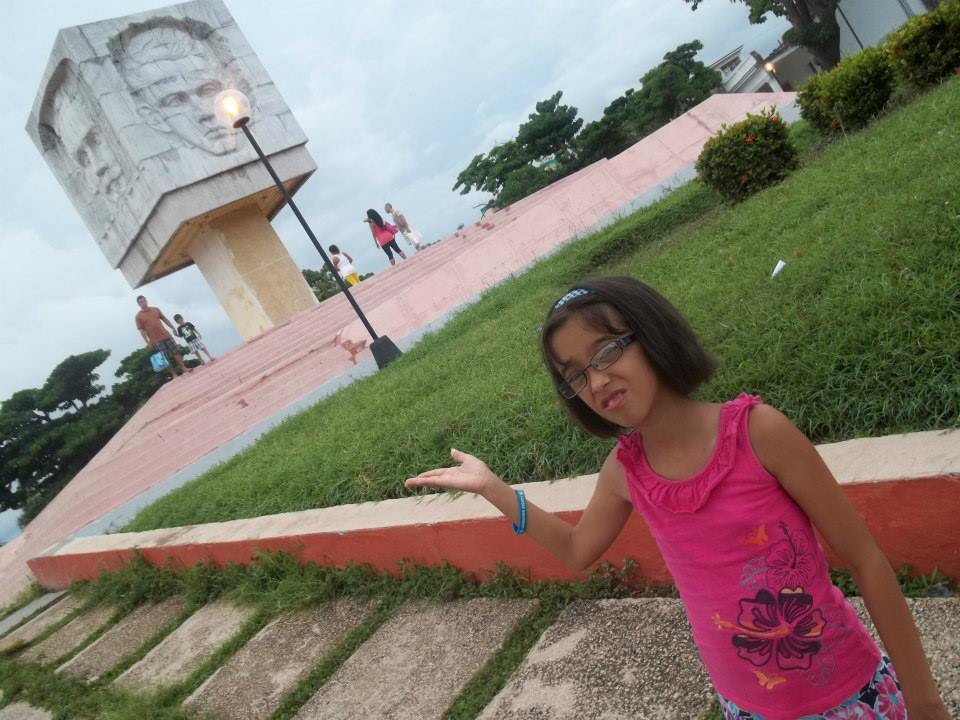
A testament to mine and my family's suffering under a dictatorship:
My mom’s grandmother had to leave her two daughters to earn money in a different city. Her daughters had to work under their abusive grandmother and later joined my great grandmother in a co-op apartment building. Two young girls, along with their mother, had to work just to survive.Eventually, one of them married and had my mom, the last of my grandmother’s four children. They were forced to live in this co-op space for some time because they couldn’t afford a better home. My great grandmother later had to leave her family behind in Cuba to join her husband in the United States after he was involved in a failed assassination attempt. This was during the Cuban exodus .
My dad grew up in a Cuban style Khrushchevka with his entire family. He was the only one amongst his siblings to become successful later in life. He put himself in a boarding school to escape abuse at home and was forced to survive on his own. There was a lot of theft at his school, so he had to learn how to protect himself and his belongings. He taught himself how to cook, clean, dress proper, and speak proper. He became his own teacher when his parents weren't there to help him with homework.
"Khrushchevkas are a type of low-cost, concrete-paneled or brick three- to five-storied apartment buildings (and apartments in these buildings) which were designed and constructed in the Soviet Union from the early 1960s onwards, when their namesake, Nikita Khrushchev, was leader of the Soviet Union." (Wikipedia.org)
He later earned an MD in engineering, met my mom, and settled down. He built our house in Cuba himself, with only minimal help from his brother, who was a painter. Even while working a government job at Santiago's airport, he still had to take on side jobs. He spent long hours working at a food market to earn enough money to take us out of Cuba. He was eventually “fired” from his job after authorities discovered found out he was leaving for Canada and labelled him a traitor.
I grew up in a loving family, but we struggled economically. Sometimes my only meal at school was bread with oil and salt. My mom had to make me shoes out of mousepads from my dad’s job because my parents couldn’t afford real ones. I wore hand-me-downs from relatives in the US and my older cousins, and I only had two school uniforms. I was often jealous of my best friend, who had more than I did.
As a Cuban born and raised in the country, I feel a responsibility to speak about this. Many people are misinformed because they have no direct contact with Cubans.
Let me make myself clear: I do not support Donald Trump, and I think he's a pathetic person. I believe that he will destroy my country. That does not mean I support the communist regime. The dictatorship bears the greatest responsibility for Cuba’s problems.
Many people confuse these terms:
blockade: A military action that restricts trade by force (air or sea), often involving violence and affecting other countries.embargo: A non-violent restriction on trade between countries. It does not affect other countries.
The US had imposed the US embargo against Cuba in 1958, which means it restricts its own trade with Cuba. Other countries are still free to trade with Cuba.
Batista, Castro, and Che
Before Fidel Castro, there was Fulgencio Batista, a US backed dictator.Some people assume that opposing communism means supporting Batista. That is false. Batista was widely disliked in Cuba. His regime was marked by violence, repression, and the prioritization of foreign investors over Cuban citizens.
Batista came to power through a military coup in 1952, overthrowing a democratic system. He cancelled elections and took power as an authoritarian leader. His government relied heavily on military force to maintain control.
Under Batista:
- thousands of Cubans were killed, tortured, or “disappeared” for opposing the regime. Police and military forces targeted students, activists, and political opponents.
- freedom of speech and the press were restricted. Anyone who spoke out risked imprisonment or death.
- the government was tied to organized crime. American mafiosos, such as Meyer Lansky, were allowed to operate casinos and businesses in Cuba, especially in Havana (the capital city of Cuba).
- wealth was concentrated among elites and foreign investors, while many Cubans lived in poverty, especially in rural areas
- US businesses and investors had major control over Cuban industries, including sugar production and tourism.
Castro's initial goal was to redistribute land and face the oligarchy. Early reforms improved education and healthcare. Cuban doctors became well known, and are STILL well known for their training and expertise. However, conditions worsened significantly after the collapse of the Soviet Union, when Cuba lost its main economic ally.
Che Guevara was one of the most influential figures of the revolution and served as a close advisor to Fidel Castro. Westerners love to romanticize Che while not knowing his dark history.
After the revolution, he was put in charge of prisons like La Cabaña Fortress, where people accused of opposing the revolution were imprisoned. Many of them did not get fair trials. Some trials lasted only a few minutes. Many were executed by a shot to the back. Innocent people died, and there was no real way to defend yourself if you were accused. He believed that violence was necessary to protect the revolution. He supported executions and saw them as justified. If you disagreed with the government, you could be labelled a traitor. It wasn’t just soldiers or Batista supporters either. Intellectuals, journalists, and people with different political opinions were also targeted. If you thought differently, you were a problem.
Che also played a role in developing the economy. He pushed for strict government control and expected people to work out of loyalty to the revolution, not for personal gain. But this didn’t work the way he thought it would. It led to inefficiency, shortages, and more struggles for everyday people.
A lot of people outside Cuba see him as a symbol of rebellion, but for many of us, he represents repression and fear.
Because of the regime, many things were banned and controlled. You couldn’t think differently. Imagine 1984 by George Orwell.
You couldn’t protest, you weren’t allowed to vote for another political candidate, and you couldn’t start your own business. If you said something against Castro, you could be sent to prison or a labour camp. Neighbours were taught to spy on each other and report any “traitorous” behaviour. Some laws and practices targeted people for who they were, not just what they believed.
If you were homosexual, you could be harassed, detained, or imprisoned. In earlier decades of the regime, many were sent to forced labour camps like the UMAP camps. These camps weren’t just for criminals. They were for people the government saw as “undesirable.”
You could be applying for a Cuban passport to explore another country, and you would be sent to a UMAP (Unidades Militares de Ayuda a la Producción) camp.
Being gay was treated as something wrong, something that had to be “fixed.” People lost jobs, were excluded from education, and were publicly shamed. Your identity alone could make you a target. This wasn’t just about politics. It was about control over every part of your life, what you say, what you believe, and even who you are.My mom and her family had to live through this. Her grandfather and grandmother were exiled to the States during the Cuban exodus after my great grandfather was involved in an assassination attempt on Castro’s life. What happened to her? Her neighbours threw raw eggs at her in the street for something she had nothing to do with.
There are spies everywhere in Cuba; they even tried to recruit my dad to be one at his desk job. Fear of being caught kept people silent. Many outside Cuba didn’t know what was happening because information was tightly controlled and regulated.
The Internet
Almost a decade ago, internet access was slowly being introduced to Cuba. Cubans found out that they could use social media to post online. They found YouTube, where they were able to see what the outside world is like. Before that, most people had little to no access to the internet. It wasn’t something you could just have at home like in other countries. You had to go to specific public hotspots or government-controlled centres, and even then, it was expensive and limited.Even when people started getting access, it was monitored. Certain websites were blocked, and you had to be careful about what you posted. Saying the wrong thing online could still get you in trouble in real life.
When social media became more available, people started sharing what was actually happening in Cuba. Videos of protests, power outages, and food shortages; things that had been hidden for years. For the first time, the outside world could see it directly from Cubans themselves.
But even that came with consequences. During protests and political unrest, the government has shut down internet access completely or slowed it down so people couldn’t communicate or share information.So yes, the internet came, but not with full freedom. It came with restrictions, fear, and control, just like everything else under the regime.
A Crisis
Necessities are rationed: food like grain, oil, milk, and meat is limited. Meanwhile, government officials enjoy privileges, including travel and access to outside resources. If you really wanted to have milk as an adult, you would have to ask a friend or relative who has a baby if they could lend you some of their rations, and once you ran out of oil? The main ingredient in cooking all kinds of food? Tough luck.Cuba has traded with countries like Venezuela, China, Russia, Spain, Germany, and Canada. Despite this, infrastructure has deteriorated. Hospitals are underfunded, while resources are directed towards tourism and hotels.
When I was a child, my family was poor. We were not Batista supporters. We did not come from slave owners or landowners. People accuse my family of being those things, which is ridiculous. My dad is Black, and so is his side of the family. My mom is mulata, and we have Chinese indentured workers as part of our ancestry. My family members are descendants of oppressed groups, and we are still anti-communist.
The Cuban government has a large hand in the country’s suffering. As I said, the U.S. placed an embargo in the past, not a blockade. What you’re seeing today is not new. The power outages are not new. The lack of water is not new. The crumbling buildings are not new. The government in Cuba made its citizens believe they were going through a blockade when they weren’t. Many high-ranking officials had bank accounts in other countries and hoarded the wealth. They were able to stuff their bellies full while the people suffered. Carolina Barrero, a Cuban writer, has gone into better detail than I ever could: https://www.journalofdemocracy.org/online-exclusive/the-cuban-embargo-does-not-exist/
Cuba didn’t rely only on the United States. It has had trade relations with Venezuela, China, Russia, Spain, Germany, and Canada, among others. The government has prioritized tourism over its own people. Money has gone into building hotels while hospitals continue to fall apart.
It’s very funny to me that supporters of the regime can say all they want, but if they lived under the dictatorship, they would not have the freedom to express their political beliefs.
debunking regurgitated talking points from western socialists:
- “Anti-comunistas are land and slave owners”: Most Cubans are poor or come from working-class backgrounds. Wealth in Cuba today is largely concentrated among the political elite. Not only that, but not all of us are white elites. I myself am mulata, mixed with Nigerian, Chinese, and Spanish.
- “America has been hurting Cuba for 60 years”: The United States imposed an embargo, meaning it refused to trade with Cuba. This did not stop Cuba from trading with other countries. The government’s internal policies have also contributed significantly to the humanitarian crisis.
- “Cubans who are opposed to communism are in favour of imperialism": Cubans are not stupid. Many understand the risks of foreign intervention. But they are also desperate for change. For years, the world ignored Cuba’s situation. Groups like the Nuestra América convoy exist because people are trying to bring attention to what is happening, while others dismiss Cuban voices as propaganda. Many Cubans would rather risk change than continue living under a system that has failed them for decades.
Please, for the sake of Cuba, listen to Cubans. Do not let outsiders speak over people who have actually lived through this.
No one should have their own history explained to them by someone who has never experienced it.